Biology
John BrubacherProgram Advisor: John Brubacher, Ph.D (web page)
Assistant Professor of Biology


Biology is an important dimension in the intellectual and personal development of people in our society. Almost daily there are media reports on things like avian flu, stem cell ethics and intelligent design, among others. CMU seeks to give you the opportunity to interact with biologists so you can expand your view of the world, and allow you to consider more career options.

As a biology student at CMU, you can take lab courses in biology, anatomy and physiology. This will allow you to complete the biological requirements of the first year of pre-professional training in nursing, education, physiotherapy, music therapy, medicine, dentistry and other programs in the life sciences—without leaving the CMU campus.

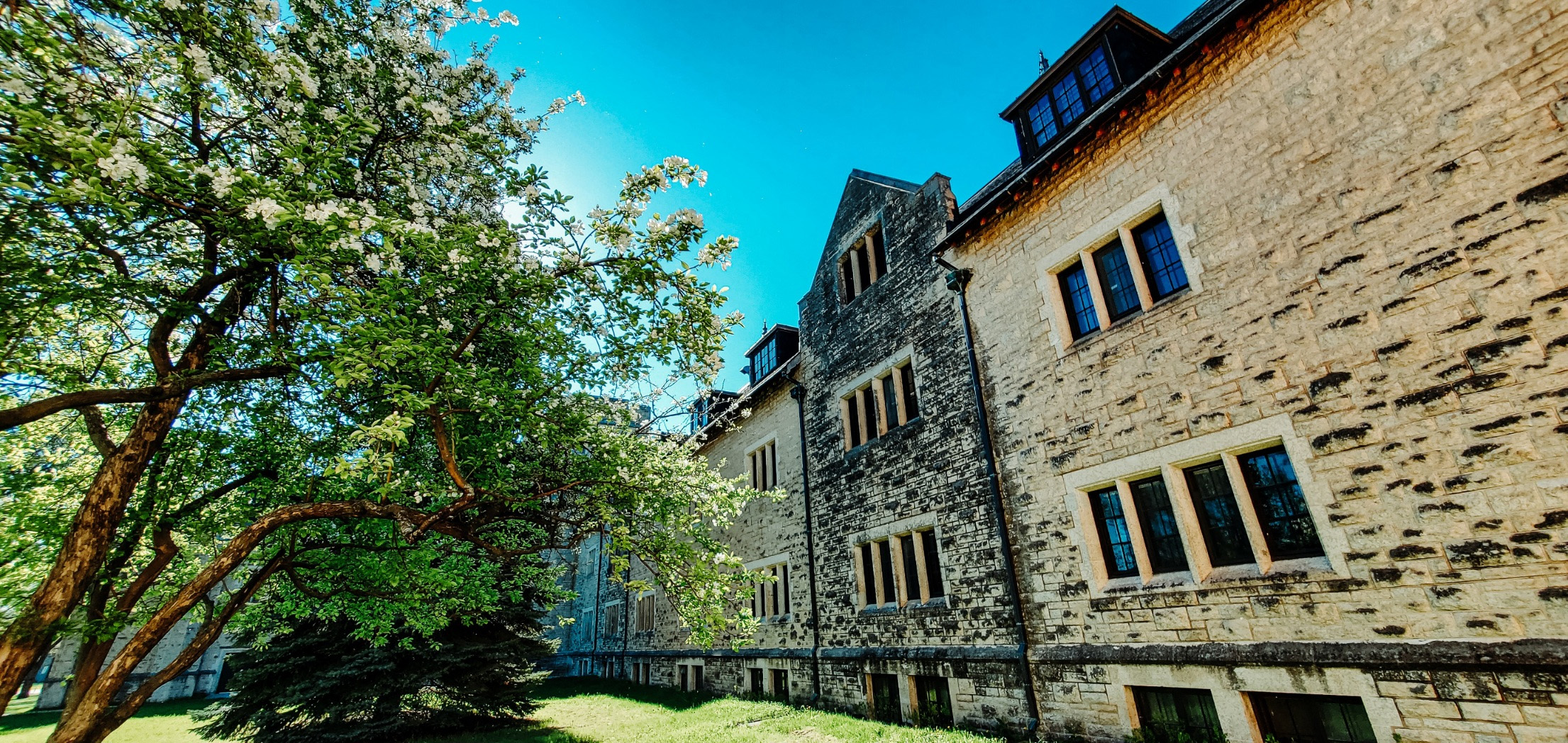
The CMU biology laboratory is generously equipped with microscopes, visualization equipment, anatomical models, charts and preserved specimens. The lab is located in Founder’s Hall, where its wall of windows overlooks the central campus. Students learn in small groups and tutorials under the guidance of professors and teaching assistants. All of our courses are fully recognized by other universities.

Find below a list of all the courses CMU offers in the field of Biology.


John Brubacher - Biology program at CMU 'From Baseball to Biologist'

Courses

The following section contains a complete list of courses for its curriculum. For current course listings please see the Course Description section of our website.

BIOL-1310/3 Biology I—Principles and Themes (Formerly: 83.131/3): A course on the unifying principles of biology, including biological molecules, cell biology, bioenergetics, cell reproduction, genetics and evolution. Includes a laboratory requirement. A laboratory fee will be assessed. Students may not hold credit both for this course and for BIOL- 1331/3.Prerequisites: Biology 40S, Chemistry 40S, and Math 40S (applied or pre-calculus).

BIOL-1320/3 Biology II—Biological Diversity, Function, and Interactions (Formerly: 83.132/3): An introduction to biological diversity, including micro-organisms, animals and plants; the form and function of plants and animals and the basic concepts of ecology. Includes a laboratory requirement. A laboratory fee will be assessed. Students may not hold credit both for this course and for BIOL-1341/3. Prerequisite: BIOL- 1310/3.

BIOL-1331/3 Biology—The Science of Life (Formerly: 83.133/3): A course on the underlying features of life and living things. Topics covered include scientific reasoning, the nature of life, and the molecular and cellular composition of living things. Special emphasis will be placed on heredity, genes, the decoding of genetic information, and related topics such as genetic engineering and the basis of evolutionary change. Intended for non-science students. Students may not hold credit both for this course and for BIOL- 1310/3.

BIOL-1341/3 The Living Planet (Formerly: 83.134/3): A broad survey of the living organisms on our planet, their interrelationships and their interactions with each other, including an examination of the concept of “species”, an exploration of the diversity and interrelatedness of living things, and an overview of ecology as a scientific discipline at the levels of populations, communities and ecosystems. Topics to be covered include species interactions (symbiosis, competition, parasitism and predation), energy flow, nutrient cycling, and conservation biology. Intended for non-science students. Students may not hold credit both for this course and for BIOL-1320/3. Prerequisite: BIOL-1331/3.

BIOL-1350/3 Essentials of Microbiology (Formerly: 83.135/3): A review of the essential principles of microbiology including immunity, with emphasis on microbial disease.

BIOL-1360/3 Anatomy of the Human Body (Formerly: 83.136/3): A study of microanatomy and gross anatomy, including changes occurring from conception to old age. Includes a laboratory requirement. A laboratory fee will be assessed. No prerequisite but high school biology strongly recommended.

BIOL-1370/3 Physiology of the Human Body (Formerly: 83.137/3): A course on the functions of all anatomical systems of the human body, with homeostatic regulatory mechanisms as foundation themes. Includes a laboratory requirement. A laboratory fee will be assessed. Prerequisite: BIOL-1360/3 or 1320/3.